The speed, skill and star power that reshaped Welsh football | Gareth Bale
- 20somethingmedia
- Jun 25
- 4 min read
Gareth Bale is one of the defining footballers of his generation, a player whose explosive pace, left-footed power and big-match instinct carried him from Southampton to Tottenham Hotspur, then into the global spotlight at Real Madrid, where he became one of the most decorated British players in the modern game. For Wales, he was more than a superstar; he was the emotional center of a national team that reached heights few thought possible.
Born in Cardiff on 16 July 1989, Bale began his professional career at Southampton, where he started as a left back before evolving into an attacking force with exceptional set-piece ability and fearless forward runs. His rise at Tottenham Hotspur turned him into one of Europe’s most talked-about talents, especially after his standout performances in the 2010/11 Champions League campaign and his individual awards in 2011 and 2013.
From Cardiff to the elite
Bale’s early career had the feel of a player being steadily remade into something more dangerous. At Southampton, he already had the technical base and delivery to stand out, but it was at Tottenham where he became truly irresistible, shifting from defender to wide attacker and then into a match-winner capable of deciding games almost single-handedly. By the time he left Spurs in 2013, he had become the Premier League’s most explosive wide threat and a player of genuine global value.
His transfer to Real Madrid made headlines across the football world, with the move widely reported as a record-breaking deal at the time. That pressure only heightened the scale of the challenge, but Bale responded with immediate impact, scoring in both the Copa del Rey final and the Champions League final in his debut season for the Spanish giants. Few players arrive at a club of Madrid’s size and deliver decisive moments so quickly.
Real Madrid legacy
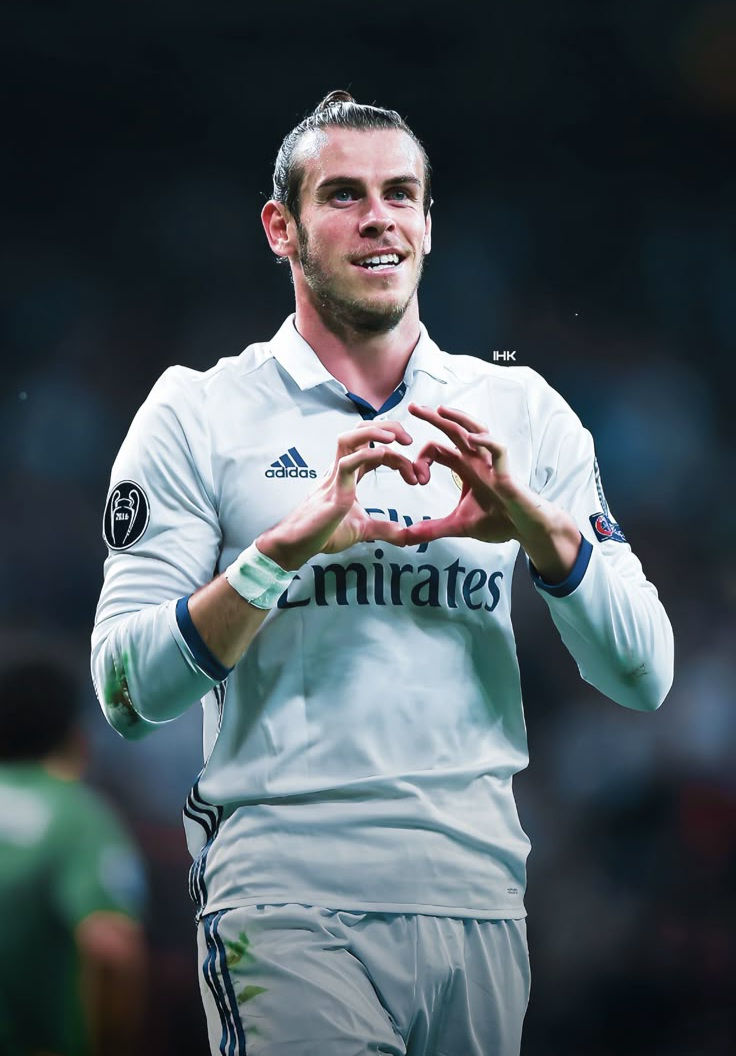
At Real Madrid, Bale built a trophy cabinet that places him firmly among the most successful British footballers ever. The club credits him with 258 appearances and 106 goals, alongside five Champions League titles, three LaLiga titles, one Copa del Rey and multiple Super Cups and Club World Cups. Those numbers matter, but what truly defined his Madrid years were the moments: the thunderous solo run in the 2014 Copa del Rey final, the powerful header in the 2014 Champions League final, and the famous overhead kick against Liverpool in the 2018 final.
He was not always embraced without reservation in Spain, particularly during the later stages of his Madrid spell, when injuries and off-field narratives complicated his public image. Still, when the biggest nights came, Bale repeatedly delivered, and his influence on Madrid’s most successful era is impossible to dismiss. In many ways, he became a player defined by extremes: immense highs, frustrating interruptions and unforgettable finishing touches.
Wales and national pride
Bale’s importance to Wales may be even greater than his club legacy. He helped transform Wales from a historically overlooked national side into a genuine tournament force, featuring at UEFA Euro 2016 and Euro 2021, then at the 2022 FIFA World Cup. His leadership, goals and presence gave Wales belief, and his performances often carried the emotional weight of an entire footballing nation.
For Welsh supporters, Bale represented both excellence and aspiration. He was the rare player who could alter how outsiders viewed an entire football culture, and his international career helped turn Wales into a team capable of competing on the biggest stages. Even in a sport crowded with elite talent, his status as a national icon remains secure.
Playing style and identity
What made Bale special was not just pace, but the combination of pace, balance, strength and striking power. He could attack from wide areas, cut inside to shoot, beat defenders in open space and produce dead-ball moments that changed matches. That mix made him difficult to contain in transition and especially dangerous in finals, where space and pressure both became decisive factors.
He also stood out for his clean, direct style. Bale did not need elaborate buildup to be effective; often, one burst of acceleration or one well-struck ball was enough to decide a game. That efficiency made him uniquely suited to knockout football, where individual brilliance often matters more than sustained dominance.
Career arc and impact
Bale’s career is often read as a story of a footballer who peaked on the grandest stages, and that is true, but it undersells his broader impact. He changed expectations for Welsh players abroad, demonstrated that a British footballer could become a central figure at Real Madrid and helped redefine what a modern wide attacker could look like. His trophy record confirms his status, but his most lasting contribution may be the sense of possibility he gave to both club and country.
Even as his later years drew more scrutiny, Bale’s overall record remained exceptional: elite club success, iconic finals, major individual awards and a sustained influence on international football. Few players leave behind such a clear blend of statistics and signature moments.
Why he still matters
A preview piece on Bale works because his story still resonates beyond retirement and beyond the scoreboard. He remains a reference point for discussions about pace, adaptability, big-game temperament and the burden of superstardom. For readers, he is the kind of player whose highlights still feel immediate: a reminder that one athlete can shape the identity of clubs and countries alike.
Bale’s legacy is not just that he won trophies, but that he did so with style, force and a sense of occasion that made him unforgettable. That is why any serious look at modern football has to include him.


Comments